Jigsolitaire Master Puzzle
Mint XX GamesBoard
4.6210.00 Reviews
- Version
- 1.0.8
- Installs
- 100.00K
- Age Rating
- Everyone
Screenshots
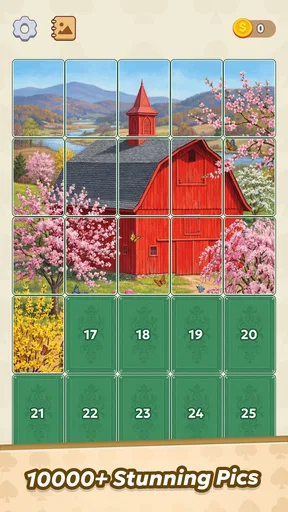
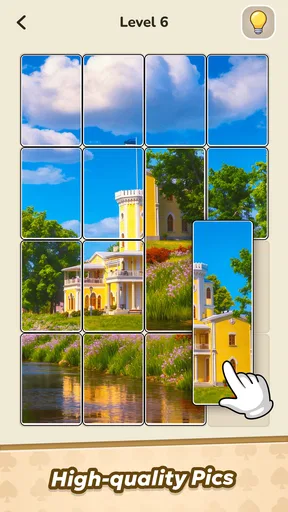
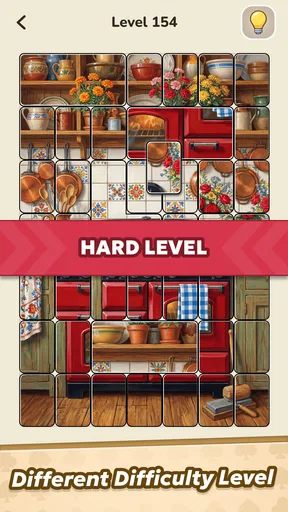
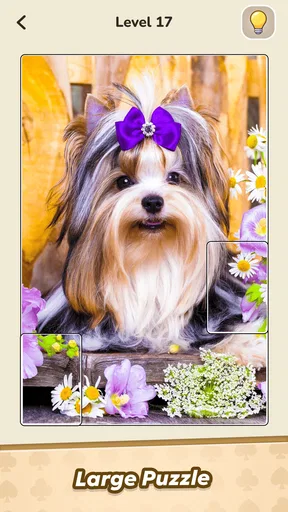
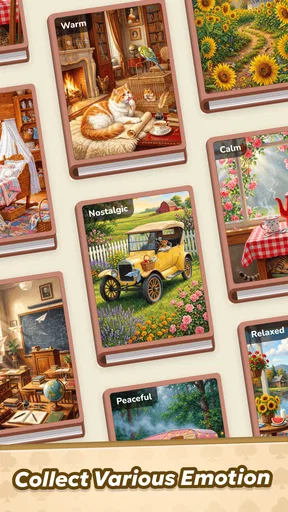
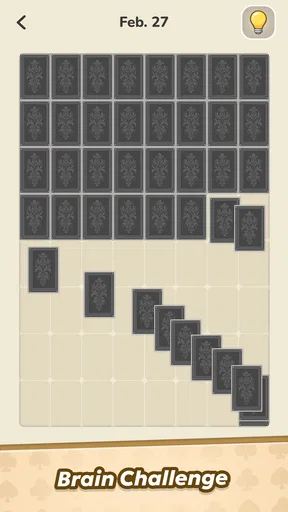
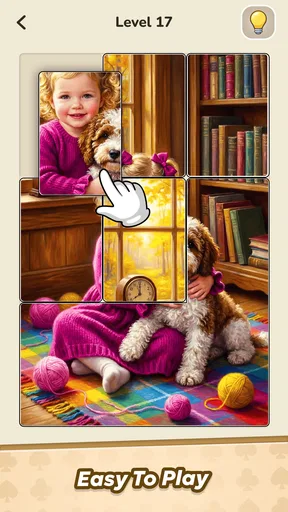
Our Review of Jigsolitaire Master Puzzle
 Analysis by Appyee
I approached Jigsolitaire Master Puzzle as a game for people who enjoy quiet, picture-based puzzles but do not always want the same kind of concentration. Its central idea combines assembling an image with the familiar rhythm of solitaire, creating a board-game experience that sits between a traditional jigsaw app and a card puzzle. That combination is the reason to try it, but it is also the main question: do you want one activity with a clear identity, or would you rather use separate apps that do each job in a more conventional way?
After spending time with it, my view is that this is best treated as a relaxed, flexible puzzle companion rather than a demanding strategy game. The visual appeal matters, the rules are approachable, and the free entry makes experimenting easy. At the same time, players looking for deep card strategy, competitive pressure, or a large set of clearly explained systems may find the experience too gentle. I would recommend it most readily to someone who likes completing images in short sessions and wants the solitaire element to keep the process from feeling repetitive.
How I would decide whether it fits
I’d use this section to help you judge the game by your own routine, not just by whether the concept sounds appealing. If you usually have brief, interruptible breaks and enjoy switching between visual attention and small decisions, that is a good sign; if you prefer one puzzle style done with full control, it may not be. I’d also give the format a few sessions before deciding, since the blend is the point to assess.
The unusual combination is the first thing to evaluate
The game belongs to the board category, but that label alone does not tell you much about the actual feel. The important detail is the blend of jigsaw and solitaire. A standard jigsaw app usually asks me to focus on shape, color, edges, and visual matching. A standard solitaire game asks me to plan moves, expose useful cards, and manage a limited sequence of choices. Here, those two habits meet in one compact activity.
That makes the game appealing when I want a change of pace without learning an entirely unfamiliar ruleset. I can approach it as a picture puzzle when I am in a visual mood, or pay more attention to the card-like decisions when I want a little extra structure. The balance is not likely to satisfy someone who expects either side to be as deep as a dedicated specialist, but it gives the experience its own reason to exist.
My first decision criterion would therefore be tolerance for hybrid design. If you enjoy games that reinterpret familiar formats, this concept has immediate charm. If you prefer a pure jigsaw with complete control over every piece, or a pure solitaire game with a strong emphasis on planning, the mixed format may feel like a compromise rather than an advantage.
Session length matters more than raw complexity
I see this as a good fit for pauses in the day: a few minutes while waiting, a quiet break after work, or a low-pressure activity before bed. The picture-solving theme gives each session a visible sense of progress, while the solitaire influence helps prevent the interaction from becoming nothing more than dragging pieces until an image is complete.
That short-session strength is also a useful test for new players. I would not begin by asking whether the game can replace every other puzzle on my phone. I would ask whether it gives me a pleasant reason to return during small gaps in the day. If the answer is yes, its simple structure becomes a benefit. If I need long-term mastery, ranked competition, or a campaign with escalating tactical demands, I would look elsewhere.
Visual motivation is part of the value
The presentation is built around pictures, and that changes how I judge progress. In many abstract board games, completing a round is satisfying because of the result on the board. Here, the image itself provides the reward. I find that especially useful when I want something calming but still want a clear endpoint.
A practical tip is to pay attention to the image as a whole before focusing on individual moves. Large color areas, repeated textures, and obvious boundaries can help me understand what kind of visual attention a puzzle will demand. Even without turning the game into a technical exercise, this approach makes the experience feel more deliberate and reduces the frustration of making random moves.
Accessibility and entry cost are straightforward advantages
The game is free, carries an Everyone content rating, and runs on Android devices using version 6.0 or later. That combination makes it easy to consider for a broad audience, including families looking for a non-aggressive board-style game and older devices that cannot run newer software. The developer is Mint XX Games, and the current release is version 1.0.8.
I would still make the decision based on play style rather than availability alone. A free download removes the financial barrier, but it does not guarantee that the hybrid format will suit someone who dislikes picture puzzles or solitaire mechanics. The low commitment is valuable because I can test the central loop without treating the download as a major purchase decision.
Who is likely to enjoy it most?
I would put casual puzzle players at the front of the audience. Someone who likes visual sorting, gentle concentration, and familiar card-game ideas will understand the appeal quickly. It can also work for players who find ordinary jigsaws too passive but do not want a fast arcade game. The added decision-making gives the hands something to do while the image gradually takes shape.
It may also suit people who alternate between moods. On one day, I may want to think carefully about the next move; on another, I may simply want to work through a picture. A hybrid game is useful in that situation because it offers a middle ground without requiring me to switch between separate apps.
I would be more cautious about recommending it to competitive solitaire players, serious jigsaw hobbyists, or anyone who needs a strong social layer. Those players may prefer a dedicated alternative designed around their particular priority. The game’s appeal comes from the meeting point between formats, not from promising to outperform every specialized option.
What stands out, and where another category may be better
The key distinction is whether you want a flexible middle ground or a specialist experience. I find the hybrid approach most useful when I’m unsure whether I’m in the mood for picture-solving or card-like choices, while dedicated jigsaws and solitaire games make more sense when I know exactly which activity I want. Thinking about that trade-off can help you decide whether this belongs in your regular rotation or is simply an occasional change of pace.
Where the hybrid format wins
The strongest advantage is variety within a simple idea. A pure jigsaw can become repetitive if every session uses the same kind of visual manipulation. A pure solitaire game can feel detached from any larger visual goal. This title gives me both a board-like decision process and a picture to complete, so the activity has more texture than either description suggests on its own.
One non-obvious benefit is that the two halves can cover each other’s weak moments. When I am tired of scanning for a matching piece, the solitaire-style structure gives me a next step. When card decisions start to feel too abstract, the emerging picture gives me a reason to continue. That makes the game useful as a mood-based option rather than a single-purpose tool.
I also like the way this concept can reduce the pressure to play perfectly. In a traditional solitaire app, a poor decision may make the entire layout feel like a failed calculation. In a picture-focused puzzle, a wrong placement may simply slow me down. The combined format encourages experimentation, although players who enjoy strict optimization may see that relaxed quality as a lack of challenge.
How it compares with a traditional jigsaw app
A dedicated jigsaw app is the better choice when the physical act of assembling an image is the main attraction. Those games usually make visual matching the entire point, which can feel more satisfying to someone who enjoys sorting edges, grouping colors, and building a picture methodically. They are also easier to understand if I want a pure, meditative activity with no card-related layer.
Jigsolitaire Master Puzzle makes more sense when a standard jigsaw feels too quiet or mechanically repetitive. The solitaire influence adds a layer of choice, so I am not only asking where a piece belongs; I am also responding to the order and structure of the board. The trade-off is that the experience may not deliver the same sense of control as a specialist jigsaw. If my ideal evening involves carefully arranging every piece at my own pace, the traditional option is probably the better match.
A useful workflow is to decide what kind of attention I have before opening the game. For visual patience, I would choose a dedicated jigsaw. For a shorter session where I want the image to guide me but still want decisions along the way, this game is more attractive.
How it compares with ordinary solitaire
Players coming from classic solitaire should expect a different priority. A conventional solitaire game is usually judged by the clarity of its rules, the quality of its card layout, and the satisfaction of finding a winning sequence. Here, the picture element changes the purpose of the session. The goal is not simply to solve a card arrangement; it is to move through a visual puzzle with solitaire ideas involved.
That makes this a weaker substitute for anyone who wants serious card-game repetition. If I am practicing planning patterns or chasing the satisfaction of a clean solitaire win, a dedicated card app should be more focused. The hybrid approach is better when I want card mechanics to add flavor rather than dominate every moment.
Another practical distinction is mental load. Traditional solitaire can become highly analytical, while a picture-based hybrid can feel more forgiving and sensory. That makes this game easier to recommend for casual use, but less compelling for players who measure enjoyment by difficulty and mastery.
Where board-game alternatives may fit better
Other board games may be preferable when I want direct competition, multiplayer interaction, or a clearly defined strategic system. This title is fundamentally suited to individual puzzle time. Someone shopping for a digital version of a tabletop classic, a head-to-head match, or a game with strong social decisions should compare it with alternatives built specifically for those purposes.
The advantage here is simplicity. I do not need to coordinate with another player or commit to a long match. That is ideal during a commute break or a quiet evening when I want control over when the session starts and ends. The disadvantage is that the experience may feel solitary for players who use board games mainly as a way to connect with others.
Small habits that make the experience better
I found that treating each puzzle as a visual planning task works better than tapping quickly. I first look for obvious relationships in the image, then use the available structure to narrow the next move. This avoids the common trap of making several guesses simply because the board appears easy at a glance.
Another useful habit is to stop after a natural point instead of forcing completion when attention drops. Picture puzzles can become less enjoyable when I continue mechanically, and the solitaire element may make that feeling harder to notice because there is always another possible move. Ending a session while the image still feels rewarding helps preserve the game’s relaxed character.
I would also use it as a transition activity rather than as background entertainment. It demands enough attention that it is not ideal while watching something complicated or trying to hold a conversation. Giving it a focused few minutes makes the visual and card elements easier to appreciate, and it prevents the game from becoming a distracted sequence of guesses.
A realistic everyday scenario
Imagine I have finished lunch but still have a short wait before my next task. I do not want to begin a story-driven game because I may need to stop suddenly, and I do not want a competitive match that creates pressure. This is where the hybrid format makes sense. I can open a puzzle, work through a few decisions, and leave when the break ends without needing to remember a complex narrative or coordinate with anyone else.
The same situation applies at night. I may want something more engaging than scrolling but less intense than a strategy game. The image-based goal gives me a gentle focus, while the solitaire structure keeps the activity from feeling completely passive. For me, that is a more convincing use case than treating it as a replacement for every other puzzle game.
What switching to it costs
Because the game is free, the financial cost of trying it is low. The bigger cost is attention: I need to learn how the jigsaw and solitaire ideas interact, and I may need a few sessions before deciding whether the blend feels natural. Players who already have a favorite jigsaw or solitaire app may also need to accept that this is not a direct upgrade. It is a different compromise.
Switching makes sense when I am tired of moving between separate apps for separate moods. One moment I want image-based relaxation; the next, I want a little more structure. This title can fill that middle space. Switching does not make as much sense when my existing app already provides exactly the depth or simplicity I want and I have no interest in a combined format.
My advice is to judge it by the quality of its middle ground. Do not ask whether it is the most complete jigsaw or the most sophisticated solitaire game. Ask whether the combination makes short puzzle sessions more enjoyable for you. That is the decision that matters.
My recommendation
With an average rating of 4.6 from around two and a half thousand ratings, the game has attracted a positive response, and its reach has passed one hundred thousand installs. Those figures suggest that the idea is connecting with a meaningful casual audience, but I would still treat them as context rather than proof that every puzzle player will enjoy it.
I recommend it to Android users who want a free board-style game with an Everyone rating, picture-driven progress, and a gentler alternative to competitive play. It is especially worth trying if you enjoy both jigsaws and solitaire but want them brought together instead of kept in separate apps. The best reason to install it is not a promise of endless complexity; it is the chance to turn familiar puzzle habits into a fresh, easygoing routine.
I would skip it if your priority is advanced solitaire strategy, a pure jigsaw workflow, multiplayer competition, or a highly demanding challenge curve. In those cases, a specialist alternative should serve you better. For everyone else, I think Jigsolitaire Master Puzzle earns a trial because its unusual format gives ordinary downtime a little more shape without making the game difficult to enter.
My final verdict is positive but specific: choose this when you want a calm visual puzzle with enough card-style structure to keep your attention moving. The real strength is the balance between picture completion and simple decision-making, not any single mechanic on its own. If that balance matches the way you like to play, this is an easy free game to keep available for those small moments when you want to relax without becoming completely passive.
Verdict
Strengths of Jigsolitaire Master Puzzle
- Relaxing solitaire gameplay combined with satisfying jigsaw puzzles.
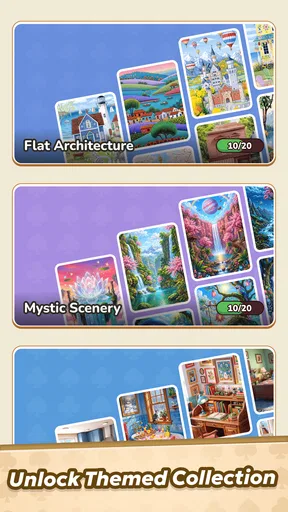
- Large variety of images helps keep the experience fresh.
- Simple controls make it accessible for casual players.
- Offline play is convenient when you have no internet connection.
- Gradual difficulty provides a comfortable challenge for most players.
Limitations of Jigsolitaire Master Puzzle
- Some puzzles or features may be locked behind progress or purchases.
- Repeated gameplay can feel predictable after extended sessions.
- Hints and assistance may reduce the challenge for experienced players.
- Advertising can interrupt the flow between puzzles.
- Limited customization may disappoint players seeking more control.
Other Releases by Mint XX Games
View All
Jigsaw Puzzle - Countryside
Board4.6

Countryside Color
Board4.7
Similar Picks in This Category
View All
Ludo King®
Gametion4.1

Ludo
Yarsa Games4.6

Tile Master® - Matching Game
Higgs Studio3.6

Checkers Online
CC Games4.6

Dominoes
Loop Games4.7

Chess
Chess Prince4.6
Frequently Asked Questions
What is Jigsolitaire Master Puzzle?
Jigsolitaire Master Puzzle is a casual puzzle game that combines traditional jigsaw assembly with solitaire-inspired gameplay. Players arrange pieces to complete colorful images while progressing through different challenges. The game is designed for short sessions as well as longer relaxing play, making it suitable for users who enjoy visual puzzles, concentration exercises, and simple touch controls on Android or iOS devices.
How does the gameplay work in Jigsolitaire Master Puzzle?
The main objective is to complete each picture by placing scattered puzzle pieces in their correct positions. Depending on the level, you may need to use matching details, shapes, colors, and image patterns to identify where pieces belong. The controls are generally easy to understand, with touch-based dragging and placement, although later puzzles can require more patience and careful observation.
Is Jigsolitaire Master Puzzle free to download and play?
Jigsolitaire Master Puzzle can generally be downloaded without an upfront purchase, but the available version may include advertisements, optional in-app purchases, or both. These purchases can sometimes provide hints, remove advertising, or unlock additional content. Before downloading, it is worth checking the current store listing, pricing, and purchase settings, especially if children may use the device.
Does the game require an internet connection?
The basic puzzle experience may be available offline after the necessary game files have been installed, which is convenient for travel or areas with limited connectivity. However, features such as advertisements, cloud synchronization, updates, online events, or newly downloaded puzzle collections may require internet access. Availability can vary by version, so testing the game in airplane mode is recommended if offline play is important.
Who is Jigsolitaire Master Puzzle suitable for?
Jigsolitaire Master Puzzle is best suited to players who enjoy calm, image-based challenges rather than fast action or competitive gameplay. Its straightforward controls make it accessible to many casual players, including people looking for a relaxing way to pass time. Users who dislike advertisements, repetitive mechanics, or optional purchases should review the game’s current permissions and monetization details before installing it.
Play our best games!


